The Brick Cartel is Cracking
April 19, 2026
There is a certain kind of article that exists purely to pretend it is helping you while selling you something. You can usually spot it by what it leaves out.
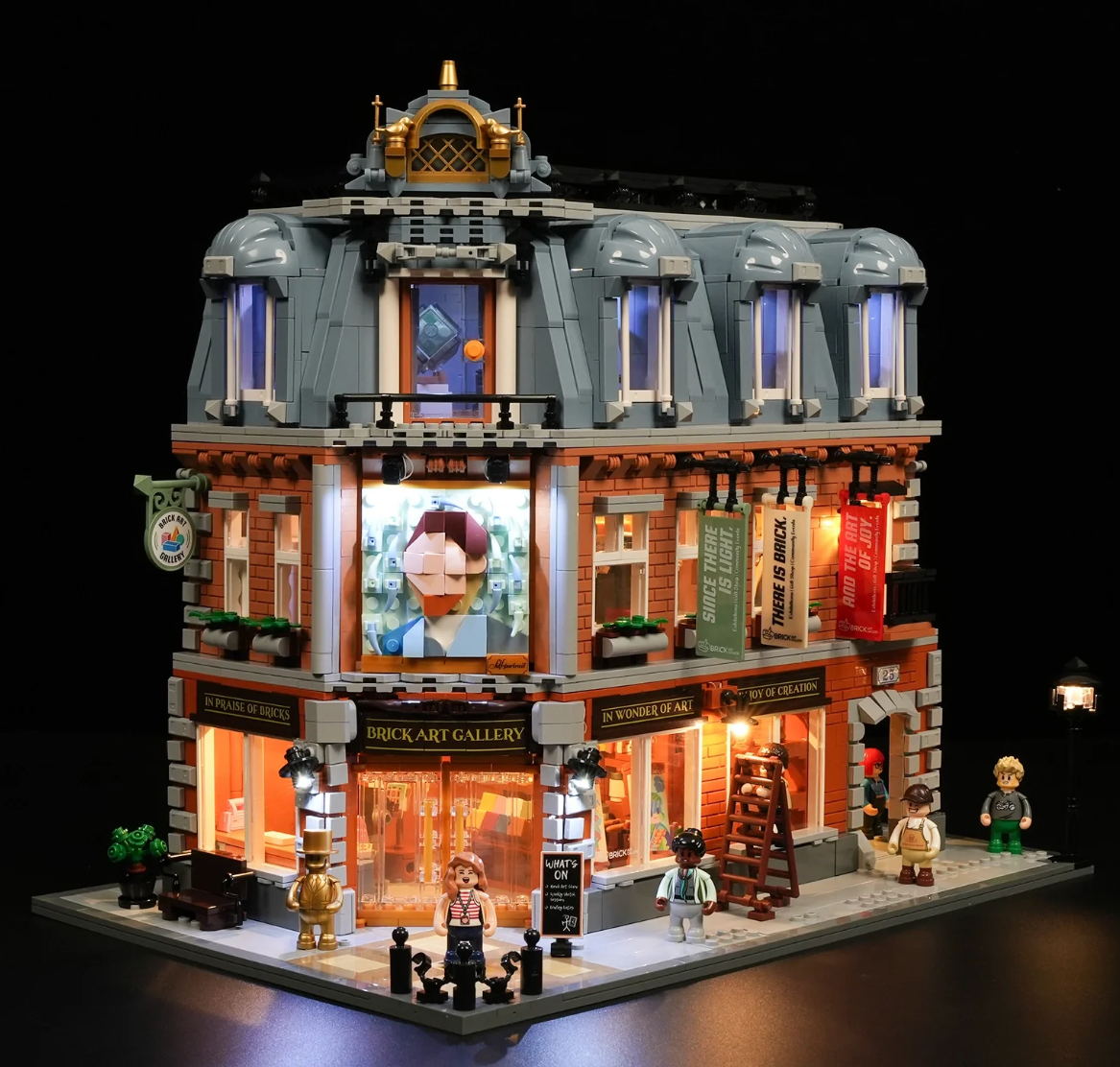
Lumibricks published a "best Lego alternatives" guide. Lumibricks is a Lego alternative brand. Conspicuously absent from their list — Nifeliz, Tycole, Zenithflow. Companies that make directly comparable products at similar price points. The article is not a guide. It is an advertisement wearing a guide's clothing.
This is not a criticism of Lumibricks specifically. It is just how the internet works now. Every "best of" list has a sponsor. Every review has an affiliate link. The only honest review is from someone who actually bought the thing with their own money and has no reason to tell you it is good. The one thing that we should teach our kids (again) is how to critically think and learn how to filter content that soles purpose is to sell you something as opposed to educating you so you can make a good decision.
So here is one of those.
What actually happened to Lego
Lego's patent on the basic brick expired years ago. What that means in practice — any company can now manufacture compatible bricks without legal consequence. The design is in the public domain. The only thing Lego owns now is its brand, its licensing relationships, and its reputation for quality control.
That is still a lot. But it is not everything it used to be.
A Reddit thread asked what would happen if Lego fans found out about alternative brands. The answers were illuminating. One person noted that Lego's staff discount is 50% and they are still profitable at that price — which tells you something about the margin built into every set you buy at retail. Another pointed out that someone spent $600 on three large sets that would have cost $2,000 in Lego. A third bought a four car European train for $140 that Lego would charge several times that for.
The counterargument — quality, safety, consistency — is real but increasingly thin. Three years ago the alternatives were noticeably worse. Today the gap has narrowed considerably.
The Lumibricks exception — and why it matters
Before I get into the broader alternatives landscape, Lumibricks deserves its own section. Not because their article is unbiased — it is not — but because their product is genuinely different from the alternatives pack in two specific ways.
First — no stickers. Lumibricks, formerly known as Funwhole (you can still find sets under that name if you look), uses printed pieces throughout. Not sticker sheets. Printed directly onto the brick. This sounds like a small thing until you have spent an hour trying to apply a sticker sheet straight and watched half of them peel within a week. Printed pieces look better finished, build cleaner, and last longer. It is a meaningful differentiator.
Second — LEDs built in by default. The name Lumibricks is not arbitrary. The sets come with integrated LED lighting systems as standard. Not as an aftermarket add-on, not as an optional extra — built into the design from the ground up. The result is a finished display piece that is lit from within, which in the architecture and cyberpunk categories especially produces something that looks considerably more impressive than an equivalent unlit set. This is where Lumibricks genuinely earns its premium over other alternatives.
So the irony is that their article undersells their actual advantage. Instead of leading with printed pieces and integrated LEDs — which are legitimate and compelling differentiators — they wrote a generic alternatives guide that omits their competitors. The product is better than the marketing.
What I actually found with other brands
I bought Nifeliz sets. Not one. Several.
The honest verdict — good. Genuinely good in most respects. The brick quality is solid. The designs in some cases are more interesting than what Lego produces in the same category. At a third of the price that is not a small thing. That is the difference between a hobby being accessible and not.
The problems are real though and worth naming.
Stickers. They do not stay on. This is where the Lumibricks printed piece approach wins immediately and obviously. If sticker application and longevity matter to you — and they should — it is worth paying attention to which brands print and which brands stick.
Instructions. This is the one that will catch people who have not built before. The manuals can be misleading. Steps that look clear are occasionally ambiguous about part placement. In at least one case I had to go back several steps because what the manual showed did not translate cleanly to what the build required. Having built Lego for years I caught it. Someone newer to this would not necessarily have.
These are not dealbreakers. They are things to know going in.
The franchise problem
Here is where Lego genuinely wins and probably always will.
Star Wars. Mario Kart. Harry Potter. Indiana Jones. The licensed sets are not going anywhere because the licenses belong to Lego. Disney is not signing a deal with Nifeliz. Nintendo is not authorising a knockoff Donkey Kong set.
If the thing you want to build is a specific franchise property — the Millennium Falcon, Hogwarts, the DeLorean — Lego is your only legitimate option. The alternatives make their own original designs. Some of those designs are excellent. But they are not the sets your kid saw in the movie.
This is actually the clearest way to make the decision. If you want franchise sets — Lego. If you want original designs, architecture, vehicles, dioramas — the alternatives are worth serious consideration. And if you want those original designs lit from within with no sticker sheets in sight — Lumibricks specifically is worth a look, bias of their article notwithstanding.
Why this matters beyond the money
Lego got me interested in design and architecture as a kid. More than that — it showed me that you could take a box of components and build something genuinely cool. That lesson has followed me into everything I do. Building things. Renovating things. Writing code. The fundamental idea that you can start with pieces and end with something real.
That lesson should be accessible to more people. At Lego prices it is increasingly not. A large set runs hundreds of dollars. For a lot of families that is not a casual purchase. It is a deliberation.
At a third of the price — the same lesson, the same satisfaction, the same box of pieces and the same moment when it comes together — becomes something different. It becomes a Tuesday afternoon. It becomes a thing you do without having to justify it.
That is what the patent expiring actually means. Not a corporate story about brick tolerances and licensing fees. A Tuesday afternoon that was not possible before.
What to actually do with this
Start with one set. Not a huge one. A medium complexity build in a category you care about. See how the instructions read. See how the bricks feel. See whether the brand prints or stickers.
The brands worth researching that the Lumibricks article conveniently forgot to mention — Nifeliz, Tycole, Zenithflow, Mould King, Sembo. Each has strengths in different categories. None of them are Lego. Some of them are better than Lego in specific areas.
If you want the lit display piece with printed parts and no sticker grief — Lumibricks and their Funwhole back catalogue are the honest recommendation, article bias aside.
The Reddit community at r/lepin has been having this conversation honestly for years. Start there before you trust any article written by a company trying to sell you their own sets.
The Lumibricks article that prompted this: Best Lego Alternatives for Adults — read it knowing who wrote it.
The Reddit thread worth reading: r/lepin — if a majority of Lego fans found out about alternative brands what would Lego do.